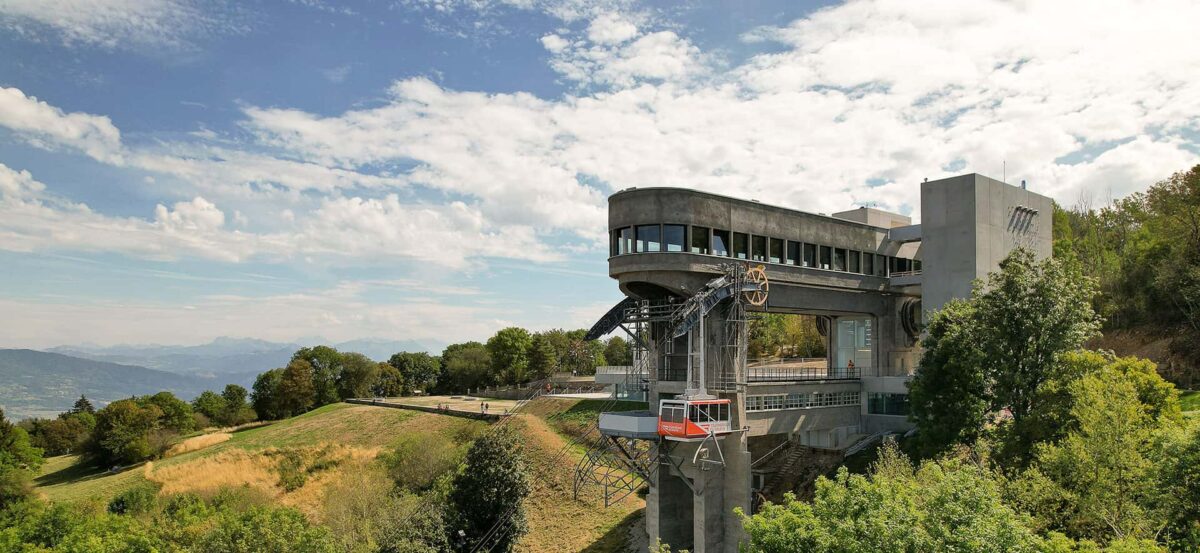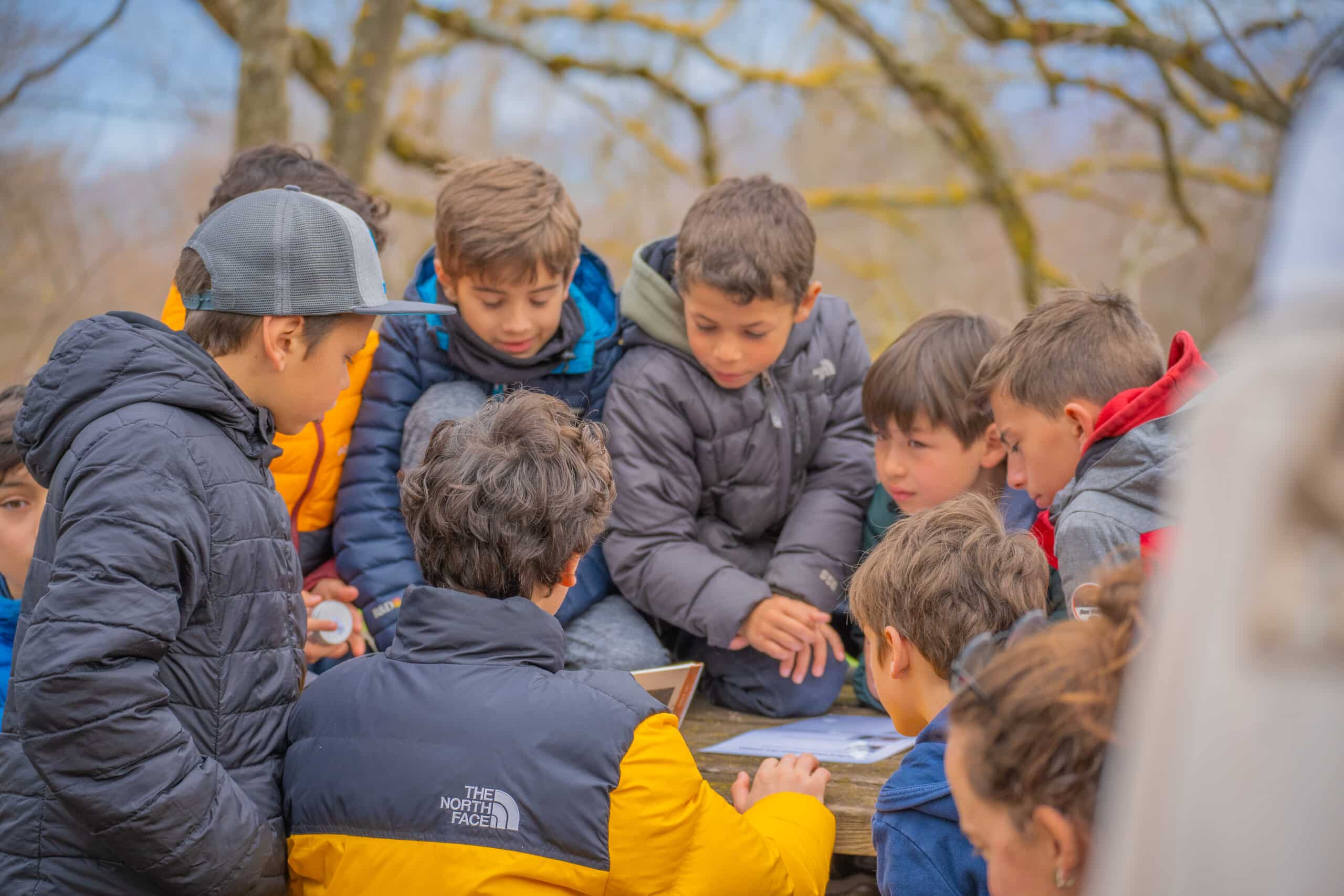

Treat your students to a school trip in the heart of nature, at the summit of Mont Salève. Accessible in just a few minutes by cable car, Mont Salève is an exceptional natural site located in Haute-Savoie, near Geneva. Your classes will benefit from educational workshops led by a nature guide from the Maison du Salève, aligned with the French primary school curriculum (cycles 1, 2, and 3) and the Swiss Romand curriculum.
Wildlife observation, tree identification, landscape interpretation… each workshop is designed to spark the curiosity of young and old alike, while also aligning with your educational objectives. And the good news is: the activities are free with a cable car ticket!
Why choose Mont Salève for your school trip?
Mont Salève offers everything you need for a successful school trip. A pristine natural setting in the mid-mountain region, quick and easy access by cable car from Étrembières, and a breathtaking panorama between Lake Geneva and Mont Blanc will amaze students from the moment they reach the summit.
The advantages of a school trip to Mont Salève:
- A wide range of educational activities
- Free activities included with the cable car ticket
- Workshops aligned with the French primary school curriculum (grades 1-5) and the Swiss Romand curriculum
- Supervision by a nature guide from the Maison du Salève
- Quick and easy booking via an online form
- Free access to the 360° panoramic terrace
An easily accessible location: 20 minutes from Geneva, 15 minutes from Annemasse, 35 minutes from Thonon, 40 minutes from Annecy, and less than 2 hours from Lyon and Grenoble
Our educational workshops at Salève
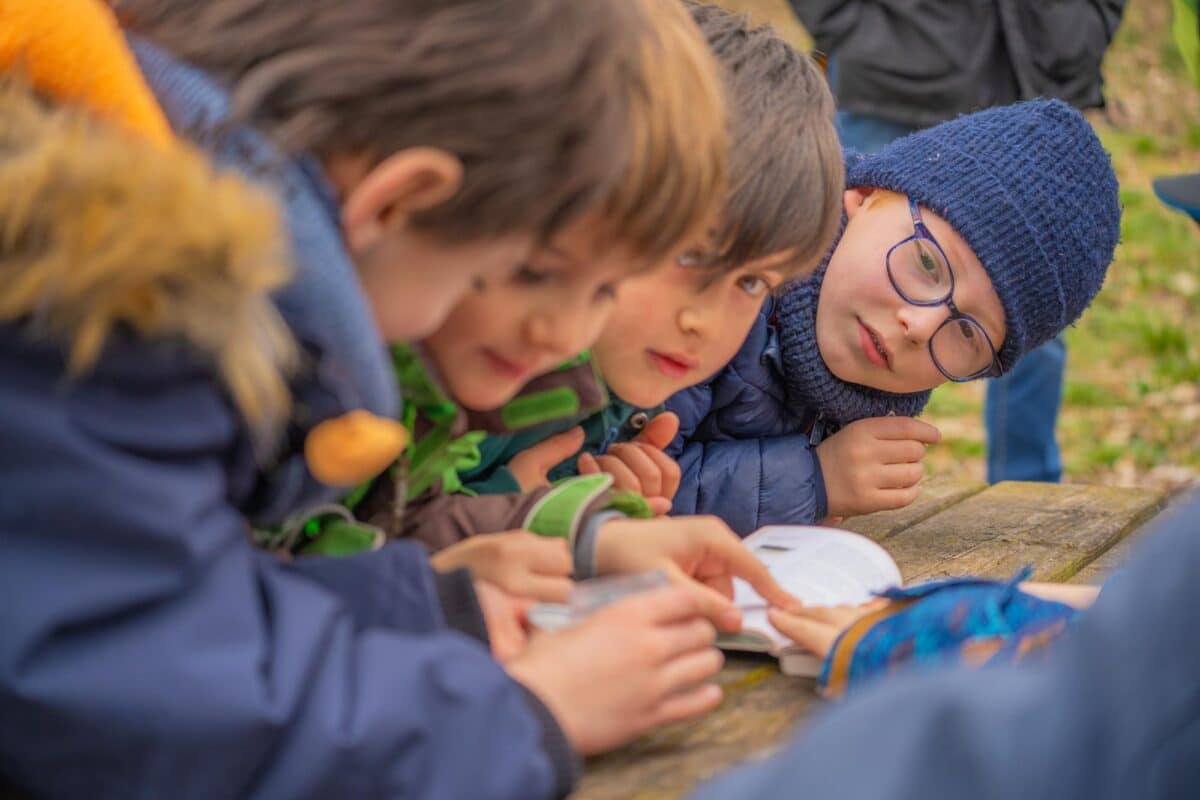
Observing chamois, learning to recognize trees, building a model of the Salève… the nature workshops at the summit cover a variety of themes, suitable for both a school trip and a cultural outing.
CHAMOIS AND COMPANY
Students set off to discover the wild mammals of Mont Salève: chamois, roe deer, red deer, wild boar… Through the use of an identification key and the observation of signs of their presence, they learn to identify these species and understand their way of life in the mid-mountain region.
Learning Objectives
- To become familiar with the common fauna of the mid-mountain region
- To learn the biology of these species (diet, habitat, reproduction, calls)
- To learn how to use an identification key/simple identification guide
- To (re)discover the chamois, roe deer, red deer, and wild boar
-
CH PER
MSN 18: Exploring the Unity and Diversity of Living Things
MSN 28: Determining Characteristics of the Living World and Various Environments and Drawing Consequences for the Sustainability of LifeFR Cycle 2 | Questioning the World of Living Things, Matter, and Objects
How to Recognize the Living World?FR Cycle 3 | Science and Technology
Living Things, Their Diversity, and Their Characteristic Functions
Planet Earth. Living Things in Their Environment
A TREE AS A FRIEND
Between sensory and naturalist approaches, students are invited to learn about, touch, and ask questions about the trees of Mont Salève. This activity reconnects the classroom with nature and fosters a sensitive appreciation of plants. The workshop is available from April to October.
Educational Objectives
- Understand the life cycle of a tree: photosynthesis, evapotranspiration, sap, reproduction…
- Discover several common species of the region (mountains)
- Understand the role of trees for the rest of the living world and the services they provide
- Develop a sensitive appreciation for plants
-
CH PER
MSN 16: Exploring natural phenomena and technologies
MSN 18: Exploring the unity and diversity of living things
MSN 28: Determining characteristics of the living world and various environments and drawing conclusions for the sustainability of lifeFR Cycle 2 | Questioning the living world
Understanding the characteristics of the living world, its interactions, and its diversityFR Cycle 3 | Science and Technology
Living things, their diversity, and the functions that characterize them
Highlighting the place and interdependence of different living beings in a food web
Planet Earth. Living beings in their environment
Identifying environmental issues
ALL ROADS LEAD TO THE SALÈVE
A dynamic and engaging activity that helps students understand the interactions between the movement patterns of humans, wildlife, and plants. Through role-playing, each participant is invited to reflect on their own movement patterns while discovering the concept of a wildlife corridor.
Learning Objectives
- Understand the concepts of movement and wildlife corridors.
- Identify movement patterns for wildlife, plants, and humans.
- Understand the interactions/impacts between different modes of movement.
- Reflect on one’s own movement patterns and ways to take action.
-
CH PER
MSN 16: Exploring natural phenomena and technologies
MSN 18: Exploring the unity and diversity of living things
MSN 28: Determining characteristics of the living world and various environments and drawing conclusions for the sustainability of lifeFR Cycle 2 | Questioning the living world
Understanding the characteristics of the living world, its interactions, and its diversityFR Cycle 3 | Science and Technology
Living things, their diversity, and the functions that characterize them
Highlighting the place and interdependence of different living beings in a food web
Planet Earth. Living beings in their environment
Identifying environmental issues
THE LANDSCAPE IN EVERY SENSE
After an introduction to familiarize themselves with the landscape and its key elements, students are encouraged to reflect on the relationship between humans and nature. Mont Salève becomes a veritable observatory for discovering the landscape through the senses and considering the future of the region.
Learning Objectives
- To describe a landscape
- To discover the landscape through the senses
- To discover Mont Salève as a landscape observatory
- To question the place of humans in their environment
- To explore the concept of territory
-
CH PER
Sciences and Social Sciences (SHS) 11: Understanding one’s spatial and social context
SHS 21: Identifying the relationships between human activities and the organization of space
MSN 18: Exploring the unity and diversity of living thingsFR Cycle 2 | Questioning the World
Building spatial reference points
Locating oneself, orienting oneself, and situating oneself in a geographical space
Understanding that a space is organized
Identifying landscapesFR Cycle 2 | History and Geography
Naming and locating a place in a geographical space
Naming, locating, and characterizing spaces
Situating places and spaces in relation to one anotherFR Cycle 3 | Science and Technology
Identifying some human impacts on an environment (behaviors, developments, impacts of certain technologies, etc.)
Human development of space and natural constraints
Positive and negative technological impacts on the environment
BUILD YOUR SALÈVE
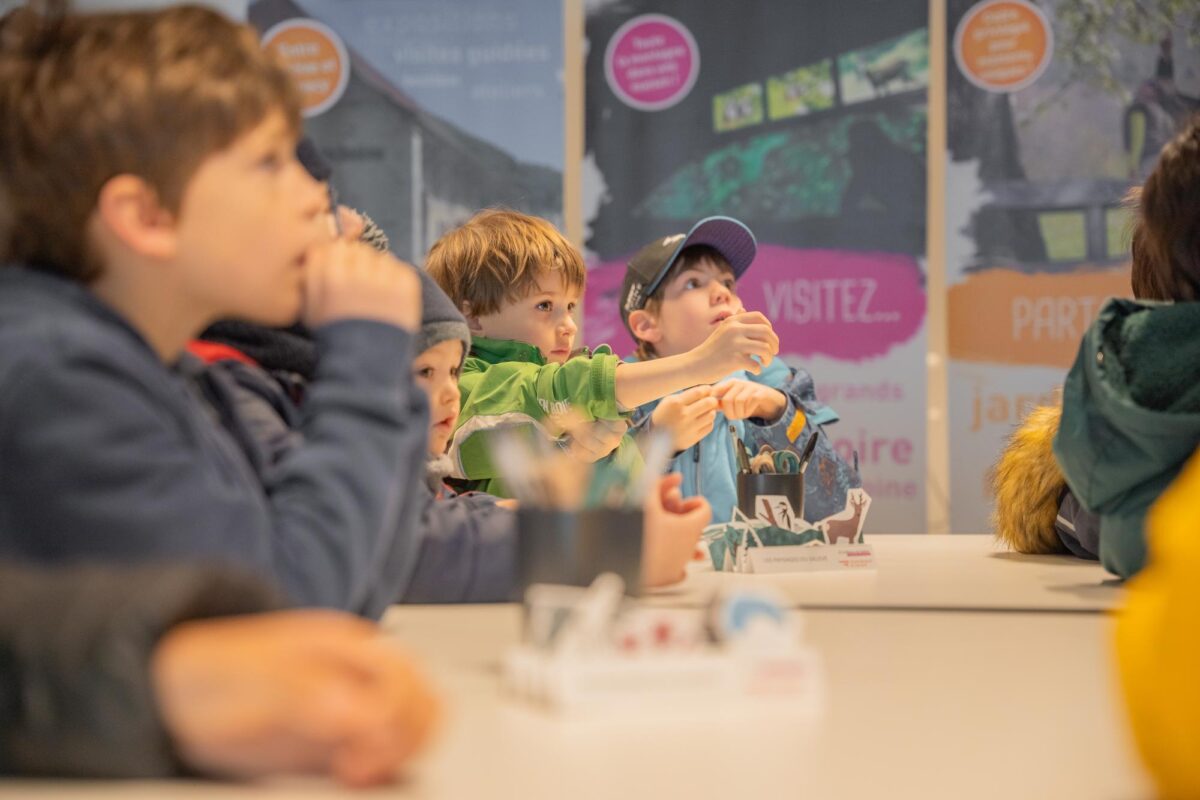
Students create a 3D map of Mont Salève to take back to class or home. This creative workshop allows them to explore the different natural environments of the mountain range and learn more about the plant and animal species that live there.
Learning Objectives
- Create a landscape of Mont Salève
- Understand how landscapes change
- Become familiar with the different natural environments of Mont Salève and the surrounding area
- Discover the wildlife of the mountain range
-
CH – PER
Sciences and Social Sciences 11: Understanding one’s spatial and social context
Sciences and Social Sciences 21: Identifying the relationships between human activities and the organization of space
MSN 18: Exploring the unity and diversity of living thingsFR – Cycle 2 | Understanding the World
Using and creating representations of space.
Constructing spatial reference points.FR – Cycle 3 | Geography
Naming and locating a place in a geographical space.
Naming, locating, and characterizing spaces.FR – Cycle 3 | Science and Technology
Identifying some human impacts on an environment (behaviors, developments, impacts of certain technologies, etc.)
Human development of space and natural constraints
Impact
Extend your outdoor education day at the summit
360° TERRACE
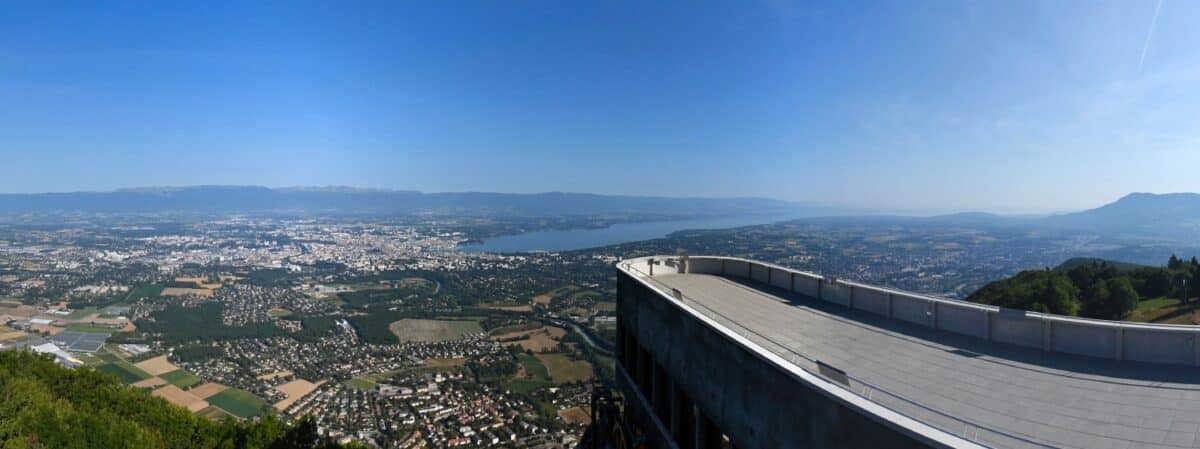
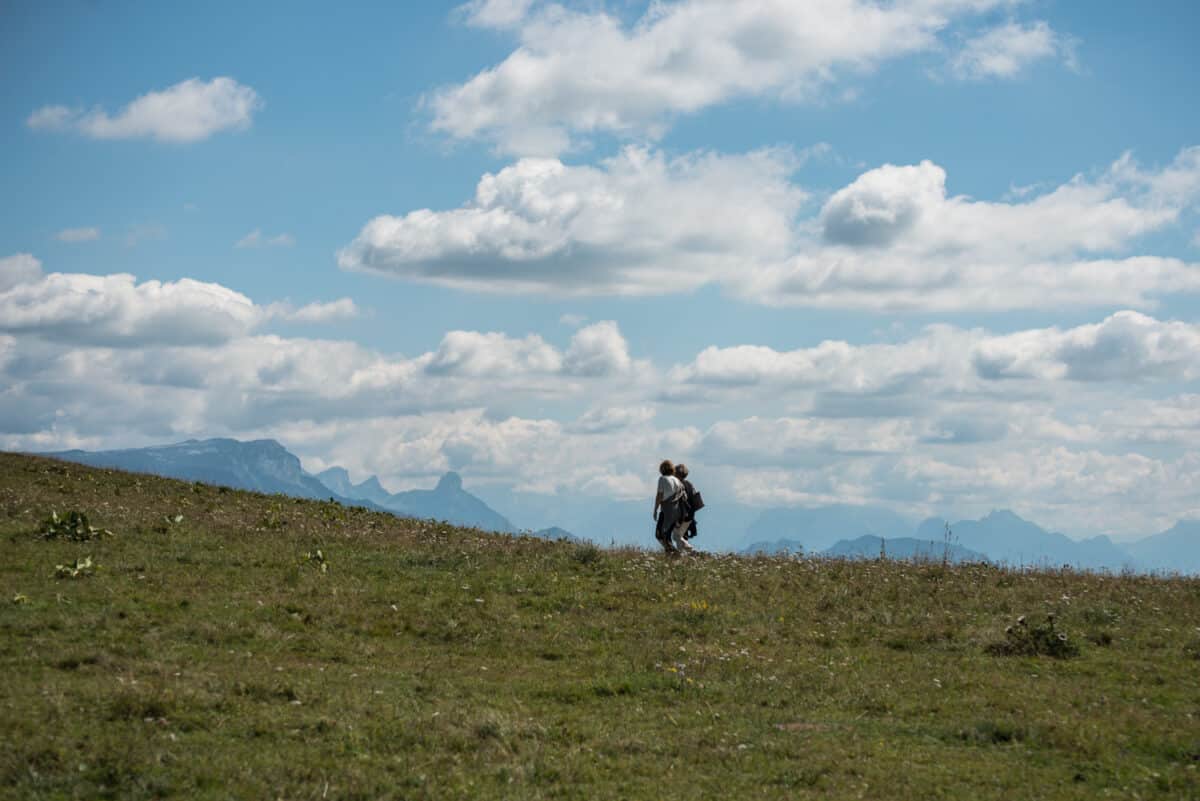
After the workshops, it’s off to the terrasse panoramique 360° for an open-air discovery experience. Students enjoy breathtaking views of Lake Geneva, Geneva, the Alps, and the Jura Mountains. Informative panels help identify the peaks and extend their learning about the landscape, all while relaxing on the grass. Access is free with the cable car ticket.
HIKING
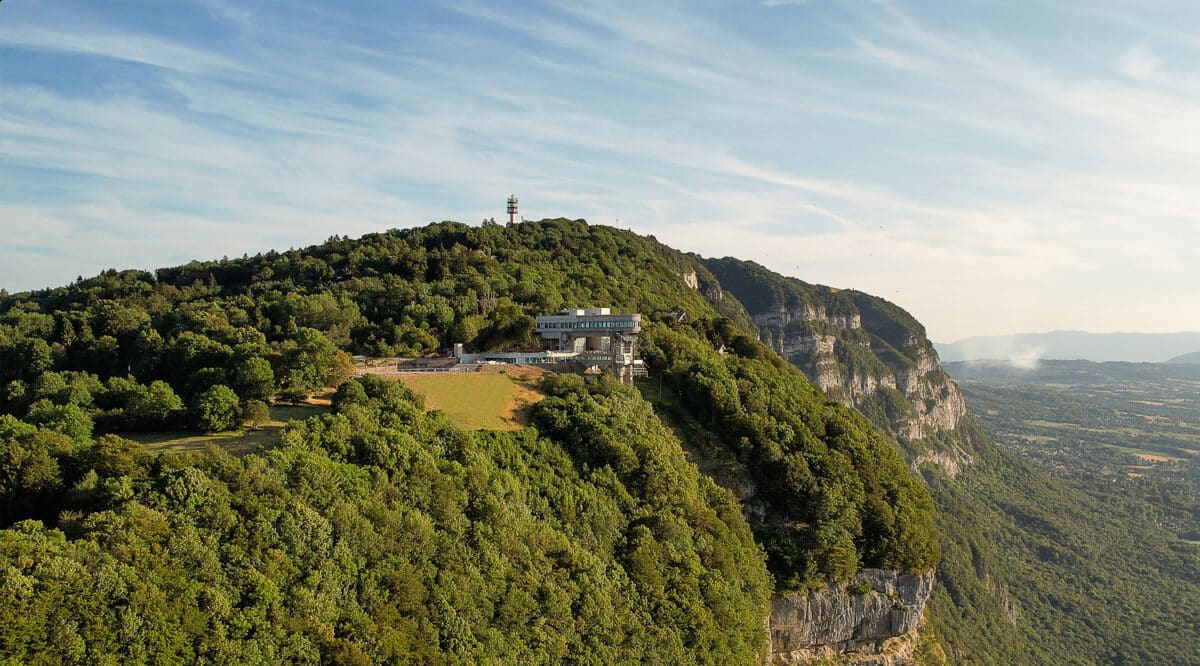
The summit of Mont Salève is also an ideal starting point for a hicke asuitable for children. From the train station, an accessible path leads to the observatory in a 30-minute walk (1.7 km — elevation gain: +153 m). A perfect way to complement a school trip with a stroll in nature. Remember to wear appropriate footwear!
PRACTICAL INFORMATION
- Duration: 1 hour per workshop group rates here.
- Age: Children aged 6 to 11 (children aged 3 to 6 are welcome with the Chamois and Company workshop)
- Capacity: Maximum 30 children per activity
- Indoor and/or outdoor activities
- Price: Free activity, included in the cable car ticket price. Find group rates here.
- Meeting point: Educational workshop at the arrival station, after the cable car ride
In partnership with the Maison du Salève
The educational workshops are led by the team from the Maison du Salève,A key cultural venue for discovering the mountain range. Through activities, guided tours and conferences, it brings the Salève and its secrets to life around nature all year round.
With the support of Département de la Haute-Savoie


frequently asked questions
-
We expect you to arrive 15 minutes before your scheduled cable car boarding time. Please go to the ticket office to collect your tickets!
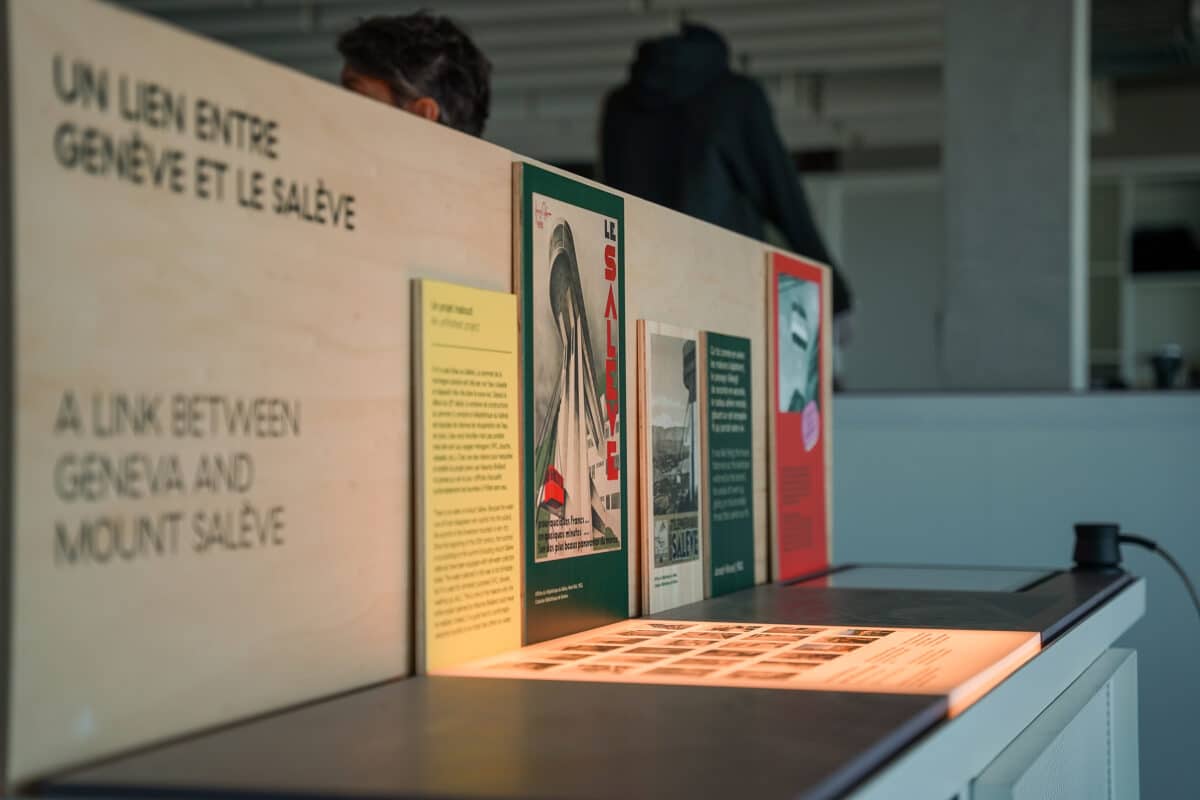
At the arrival station, the activity leader will be waiting for you at the educational workshop (please arrive 5 minutes before the start of the activity). You can leave your belongings and begin the activity. Your cable car ticket grants you access to the entire cable car area, including the exhibition and the 360° terrace.
To make a reservation, please use our online booking form. Upon receiving your request, we will contact you as soon as possible to finalize your booking.
All activities take place outdoors except for “Build Your Own Salève,” which is an indoor workshop held in the educational workshop. In case of inclement weather, the outdoor activities will be replaced by the “Build Your Own Salève” activity in the educational workshop.
Please note that these activities are offered to children aged 6 to 11. The activities are unsuitable for children under 6 years old.
-
For outdoor activities, we advise you to bring water (the stations do not have drinking water), sunscreen, and clothing and shoes suitable for the location and weather (temperatures at the summit of Salève can be chilly!).
-
We do not have a dedicated dining room. A shaded picnic area is available around the arrival station, and there are many other places suitable for having lunch while enjoying the view.
-
We offer two activities accessible to people with reduced mobility:
– Build your own Salève, which takes place indoors in the educational workshop
– The landscape in every sense, which takes place on one of our terraces. Observe chamois, learn to identify trees, build a model of the Salève… the nature workshops at the summit cover a variety of themes, suitable for both school trips and cultural outings. -
If it rains, the facilitator will offer the “Build Your Own Salève” activity, an indoor activity held at the educational workshop in the arrival station. Therefore, there will be no cancellation.